Never Give Up: Rosemary’s Story of Resilience After Business Setbacks
Twice, Rosemary lost everything she had worked so hard for to build.
First, a fire destroyed the retail shop she had funded with a HopeCore loan. Then, after using her savings to rebuild, her new shop was vandalized just two weeks after reopening.
For many small-scale entrepreneurs, this would have marked the end of the investment journey. But for Rosemary, those setbacks became a source of renewed strength and marked the beginning of a new chapter.
Starting again… and again
Rosemary’s journey with HopeCore began in 2018 after she attended a business training that opened her eyes to new investment possibilities
She started small with a loan of KES 45,000 ($352), which she used to open a small grocery and retail shop. The business grew steadily, and through hard work, she fully repaid the loan within two years.
Encouraged by her progress, she took out a second group loan of KES 60,000 ($469) to expand her business. Then disaster struck. A fire broke out and completely wiped out her shop and stock.
With only about KES 30,000 ($234) in savings, she made the difficult decision to start over by renting a new space and rebuilding her business from scratch. Then, just as things were beginning to stabilize, the shop was vandalized. Everything was lost.
“That second loss broke me. I didn’t know where to start,” Rosemary says.
As her children’s sole provider, she felt the immense pressure these repeated losses placed on her household. Meeting daily needs and paying school fees became a struggle, and she turned to casual work to survive. There were difficult days, but she kept moving forward. Slowly, with time, she began to find her footing again.
In 2025, she helped revive the Mwenda Self-Help Group, which had also collapsed, and the group rejoined HopeCore’s program in the second loan cycle. Rosemary received a KES 90,000 ($703) loan. This time, it felt different, like a real fresh start.
“I had learned from HopeCore how to manage my money, keep records, and plan my business,” Rosemary explained. “Even after losing everything, that knowledge is what helped me start again.”
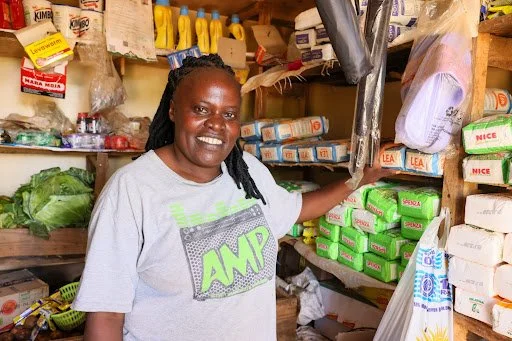
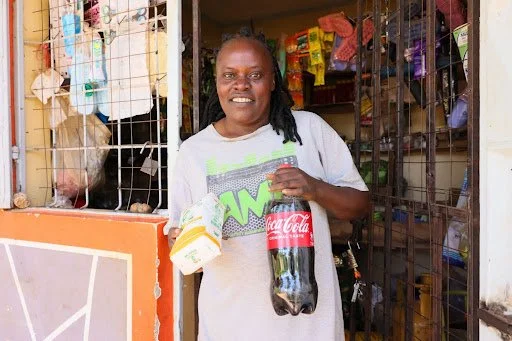
Today, Rosemary runs both a retail shop and an animal feed store. More than just businesses, they represent stability, independence, and a life she rebuilt with patience and courage.
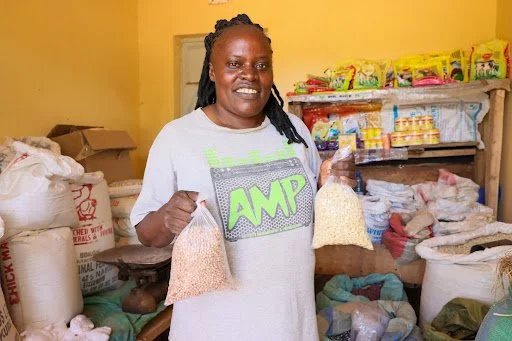
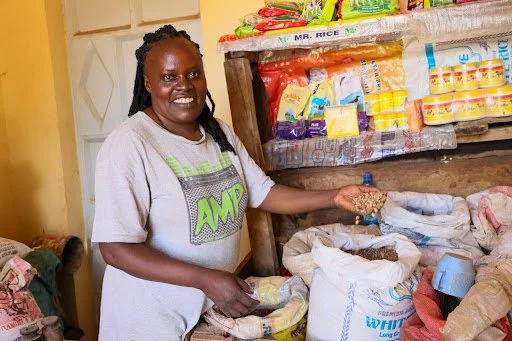
“When I look at my shops today, I feel proud. I’ve been through a lot, but I’m finally back on my feet. I’m glad I didn’t give up,” smiles Rosemary.
The Bigger Picture: The Power of Empowerment
Rosemary’s story reflects a wider reality for micro- and women-owned small enterprises in Kenya. Small businesses make up over 90% of all enterprises and contribute about 30% of Gross Domestic Product (GDP), showing just how important they are for household incomes, jobs, and local economic stability.
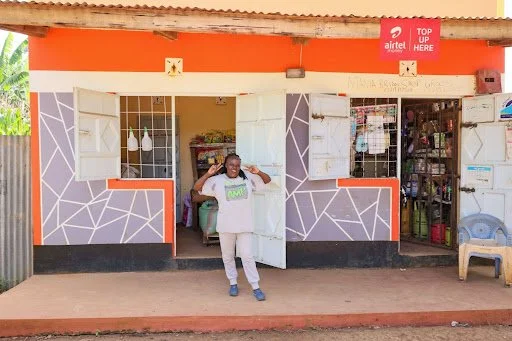
Rosemary standing proudly in front of her retail shop and animal feed store.
But these businesses are also quite vulnerable. Many operate with limited savings, informal setups, and little or no insurance, which leaves them exposed to shocks like fire, theft, illness, or sudden market changes. Women-owned businesses often face even more challenges, including limited access to affordable credit, fewer assets for collateral, and weaker financial safety nets, which makes it harder to bounce back after setbacks.
This is where programs like HopeCore’s Micro Enterprise Program come in. Beyond offering affordable loans, the program provides financial literacy training, savings discipline, and continued support that help entrepreneurs start, grow, and even rebuild businesses after calamities.
For entrepreneurs like Rosemary, having the right support at the right time can help transform challenges into stepping stones toward lasting economic security.