The Health System You May Not See: Inside the Work of Community Health Promoters
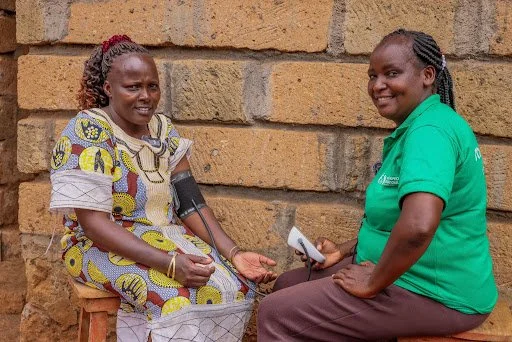
When we think about healthcare, we often picture a hospital.
A nurse taking a patient’s history. A doctor examining someone. A pharmacy dispensing medicine.
But what happens before someone gets to the hospital?
Who notices that an older person may have high blood pressure? Who reminds an expectant mother about her next clinic visit? Who checks on a child’s health? Who encourages a family to seek care when something does not seem right?
Sometimes, it is a Community Health Promoter.
And in many communities, that first point of contact is happening not in a clinic, but at the family’s doorstep.
Kenya has more than 107,000 Community Health Promoters working across the country, making preventive and primary healthcare more accessible to households. CHPs are part of the country’s wider shift towards prevention, early detection, and stronger community-level healthcare.
But what does their work actually look like?
To find out, we headed to Ikuu Community Unit, where Rosemary, a Community Health Promoter, spends her days meeting families in their homes.
A Day with Rosemary, a CHP
By 5:30 a.m., the day is already beginning for Rosemary. While the community is still quiet, she is getting her child ready for school, completing her house chores, and preparing for the day ahead.
The early start matters. Some of the families she visits will soon be heading to work, and Rosemary wants to reach them while they are still at home.
For Rosemary, caring for her community is a priority. She chose to become a Community Health Promoter because she wanted to serve the people around her and help improve their health and well-being. Like other CHPs, she receives a government stipend for her work—support that helps sustain her as she continues serving the community she cares about.
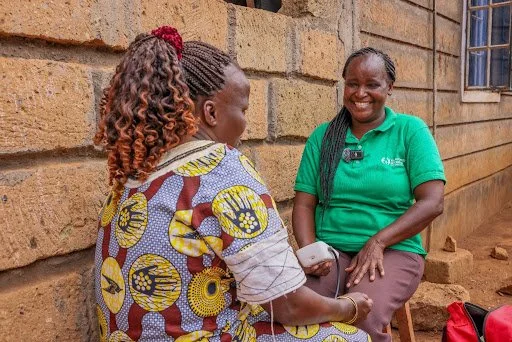
“I love my CHP job so much because I volunteered to do this work. I have to wake up early enough so I can serve my community members.” - Rosemary
Each day, Rosemary plans to visit about five to six households, checking in with families, sharing health information, and helping them take action when they need care.
As she moves from one household to another, her connection with the community is clear.
She knows the people she visits. They know her too. That familiarity makes it easier for the local community members to open up about their health concerns, ask questions, and be more receptive to health advice. Her visits are more than just health checks. They are conversations built on familiarity, trust, and a shared understanding of the community.
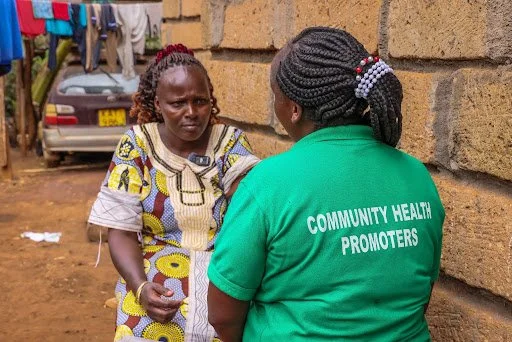
“When Rosemary comes to our home, she takes her time to educate us on health issues we may not understand. She reminds us to check our health and seek treatment when necessary. Her visits have helped us take our health more seriously.” - Salome, community member.
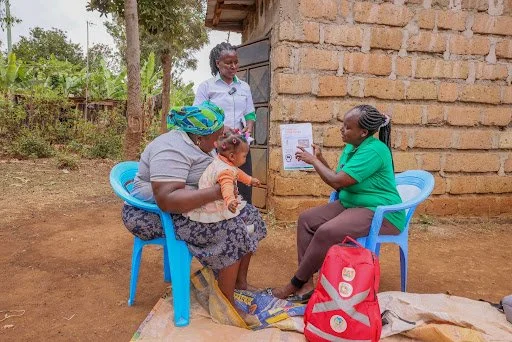
In her everyday visits and conversations, Rosemary puts the knowledge she has gained through HopeCore’s training into practice. One of the tools she carries is a health education flipbook provided by HopeCore, which she uses to make conversations with families easier and more practical.
With the flipbooks provided by HopeCore, she shares health information on blood pressure, nutrition, family planning, maternal health, and other issues that affect everyday life. When she notices a concern, she explains what it means and what the family should do next. Where further care is needed, she refers them to a health facility. In this way, she serves as a link between households and the health system, helping families get the care they need.
Before moving on to the next household, Rosemary records the visit through e-CHIS, the electronic Community Health Information System, ensuring that the information from each household is captured.
Then she moves on to the next home.
It may look like one ordinary household visit.
But multiply that visit across communities, days, and years.
1.4 Million Household Visits and Counting: HopeCore’s Support
In Tharaka-Nithi County, HopeCore supports 1,265 Community Health Promoters (CHPs) who provide health information and basic services directly to families in their communities.
Since 2020, HopeCore-supported CHPs have reached more than 1.4 million household visits with key health messages and support.
Behind that number are individual families, conversations, health checks, referrals, and moments like the one Rosemary has just had.
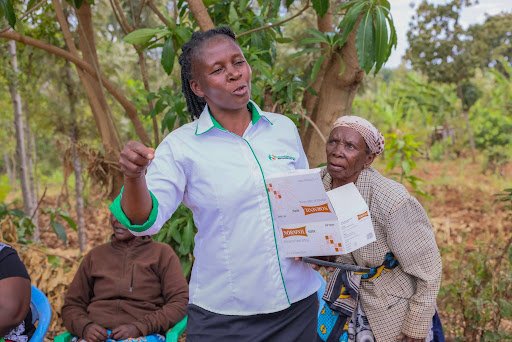
But reaching households with 1.4 million household visits does not happen by simply sending CHPs into the community. They need the right knowledge, tools, and ongoing support to do their work well.
“We train and support our CHPs, and our tele-education program has made a big difference. With our virtual classrooms, they can continue learning and get refresher training even when they are working far from us. Distance is no longer such a big barrier.” - Monica, HopeCore Community Health Officer
HopeCore also provides regular supervision and support to CHPs, helping them put their training into practice and respond to the needs they find in households.
In partnership with the County Government of Tharaka-Nithi, HopeCore has equipped CHPs with essential tools, including blood pressure machines, branded T-shirts, and backpacks, helping them carry what they need as they move from one household to another.
Through a partnership with World Bicycle Relief, HopeCore has also supported 150 CHPs with bicycles, particularly those working in vast areas where households are spread far apart. The bicycles help shorten the travel time between households and allow CHPs to reach more families.
The Work Behind Every Household Visit
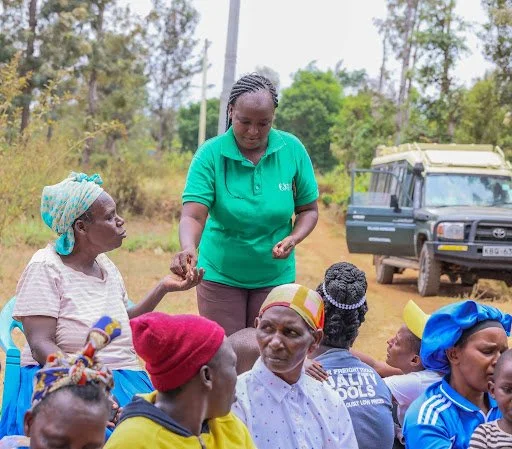
Community health is a people-centered system built on training, tools, data, and partnerships. It is a system we may not always see, but one that plays an important role in helping communities stay healthy.
Much of this work happens quietly, at the household level, helping families receive health information, guidance, and referrals before they ever reach a health facility.
And there are still more households to reach.
By supporting HopeCore’s CHP program, you can help equip more Community Health Promoters with the training, tools, and support they need to keep reaching families across Tharaka-Nithi.
Support a CHP. Reach a household. Strengthen a community.